As an avid reader of SciFi and Fantasy, here's where I pour my black and white guts out all over your freshly scrubbed floor.
Thursday, September 6, 2012
The Red Pyramid (Percy Jackson with Egyptian Flair)
One thing Rick Riordan is good at is telling a fun adventure tale. This one does not disappoint. Sadie's sassy and Carter's honorable and both of them squabble like the sister and brother they are as they share the stage and the POV shifts. Also, the hieroglyphics intermingled in the text are a cute touch. For a Middle Grade book, the story's really entertaining with a huge array of gods just like Percy Jackson. What I appreciate too (having read the Percy Jackson books) are the not-so-subtle references to the Greek gods hangin in Manhattan.
***SPOILER ALERT***
Isn't it fun to be Egyptian #1: The first big change that both Sadie and Carter deal with after the demise of dear old dad and the rise of big bad Set is all of the Egyptian studies crammed down their throat when they go to Brooklyn with Amos. They learn about the shabti, that they have magic, and that their parents were involved in something way over their heads. Oh yeah and that Sadie's cat Muffin is actually the goddess Bast. There's a lot of "I can't believe this is happening" going on, but luckily they're forced to get in the swing of things fast because the Brooklyn mansion is ambushed.
Isn't it fun to be Egyptian #2: The next big dealie that Sadie and Carter get bomb dropped on them is the whole "hosting gods" thing. When they talk to Iskandar and all the magicians, everyone's pretty anti- the kids because of how powerful they are from hosting gods. Turns out Isis took up residence with Sadie and Horus with Carter. Both kids fight to keep the gods from overpowering them, but there are a lot of scratches and dents along the way. However, while the power of the gods gives them advantages against the enemies they're fighting, it also multiplies their enemies to include all of the magicians.
Isn't it fun to be Egyptian #3: The book is a big crash course on Egyptian gods, legends and culture in a big way, so the ending makes sense with a whole lot of family (god) drama going on. Sadie and Carter deal with Set, but the whole thing seems like a repeat of the millions of other encounters and fights the gods have had with each other. I mean, brand new to Sadie and Carter for sure, but it seems like fights to the death are pretty common over Thanksgiving dinner. What they do establish through defeating Set though is a groundwork for magicians and gods working together. When Sadie and Carter give up the powers of Isis and Horus, they make a huge step towards eventual unity, which is good, because big snakey monster Apophis wants to devour the world for dinner.
So Sadie and Carter leave off their recording requesting anyone else with weird Egyptian experiences to contact them so they can begin to rally for this fight against Chaos Monster of Doom. Cool style to do it and Sadie and Carter interrupting each others' passages make for a really unique style in the writing. Best part? The recording isn't a throwaway gimmick, as it's actually prevalent in the next book.
Rating: 3
Thursday, August 30, 2012
Clean: A Mindspace Investigations Novel (Replace Harry Dresden with an overly whiny nancy boy)
So, this novel was looking to be an urban fantasy a la Dresden. But I didn't realize HOW similar it was going to play it to Dresden. The entire first half of the novel has way too many similarities to Stormfront, but not enough unique world details and fun characters to make it stand on its own. But, the biggest problem was that the main character was incredibly whiny. INCREDIBLY. Since the plot of the story was rather irrelevant (murderer wants revenge on main character for some minor altercation) I'm going to focus on the multiple things Adam whines about.
***SPOILER ALERT***
Adam Whines #1: One of the smaller things he bitches about throughout the story is his issues with the temperature, the taste of certain coffees, pretty much everything under the sun. He's a textbook complainer and it shows. When he's outside, he talks about how uncomfortable the weather is, WHATEVER said weather is. The weather one's big. He's a constant sweatbox. When he's smoking he enjoys his drags of cigarettes, but later when he's running, he stresses on how horrible his smoker's lungs are.
Adam Whines #2: Cherabino is a huge focal point to his whining. First off, while he says they have this deep connection and that she's helped him through everything, the text itself doesn't actually show that. She's cranky to him 24/7 and I can't think of one sweet moment between the two of them that didn't involve some form of doubt or backlash. If that's what he's mistaking as a deep connection and love, he's had a craptastic run of it. Granted, he doesn't help his case with her most of the time. The several occasions when she isn't being a bitch, Adam takes advantage of his telepathic abilities, entering into her mind, invading her private thoughts. He uses the situations to his advantage, getting to sleep on the floor in her bedroom, while she's creeped out by him the entire time. For a heartbeat, I thought he was doing the right thing for the right reasons when he stops her advances because she's in a vulnerable situation. Yet, then he reprimands himself mentally for not taking the chance while he had it. When you add it on top of all the other creepy things he's done, this guy isn't coming off too admirably.
Adam Whines #3: Finally, his Satin fix. Oh god, his Satin Fix. First off, he tanked his whole life when he got hooked on Satin. I got it, not his fault, he was a lab rat in a corrupt experiment gone wrong. And I understand the authenticity of writing a junkie means you need to write about their issues which genuinely include wanting a fix. I wasn't annoyed when he messed up, it was the sheer repetition of the whole thing. He could be doing anything at any time of day and all of a sudden, it all came back to Satin. Even the ending was about Satin, not his abilities as a telepath. I like flawed heroes, I really do. But when you combine the whining about the Satin on top of his whining about everything else, we get a passive, weak willed character who'd rather complain about everything than do things himself. Most of the book was spent with him talking about how brilliant and spectacular he was while he didn't do a thing about his problems.
The writing was actually solid and the world seemed really fascinating. I'd totally be willing to revisit the world if they replaced the main characters, maybe focused on Adam's ex Kara. She was competent, interesting and seemed to be a much more compelling character. But as it stands, those characters are not ones I want to follow around for an entire book.
Rating: 2
Wednesday, August 29, 2012
Searching for Dragons (In which wizards hatch yet another dastardly plot)
After the barrage of obnoxious kings, princes and knights from the first book, Mendanbar is a refreshing change of pace. He's pretty much Cimorene, if she was a man, and King of the Enchanted Forest. Like the first book, Patricia Wrede sets up a fantastic and wry tone for her world and makes the entire story a fun, engaging frolic. While the first book mostly focused on the Mountains of Morning, this one reveals a lot more about the Enchanted Forest, which is quite an imaginative realm.
***SPOILER ALERT***
Mendenbar's Expectations are Flipped #1: Cimorene is Mendenbar's biggest surprise. After all, he detests empty headed princesses almost as much as Cimorene hates knights. Which is a lot. So when he first hears about her working for Kazul, King of Dragons, he thinks she's going to be some frustrating ambitious princess who really doesn't know what she's doing. However, once he arrives to the Mountains of Morning and Kazul isn't there, the raven haired, sharp tongued, sassy woman he meets isn't remotely close to who he imagined.
Mendanbar's Expectations are Flipped #2: Magic carpets end up being a memorable part of this book, particularly the one that Cimorene and Mendenbar borrow from the Giantess. Mostly because of the pink teddy bears, but also because it fails so spectacularly as a mode of transport and makes their journey three times as difficult. Falling from the sky by teddy beared carpet was never part of their plans, but it creates an entirely new and deadly image of magic carpets. Unless they're fixed by Jack (not a thief, a businessman).
Mendanbar's Expectations are Flipped #3: A magician is NOT a wizard. The magician they meet, Telemain, makes this very clear early on. Which is good, because turns out, the wizards are the bad guys, again.Telemain on the other hand is incredibly helpful and does not leech magic in the same way wizards do. However, he's got the attention span of a ferret and is constantly intrigued by anything magical that he can analyze be it Mendanbar's sword, wizard's staffs, etc. If you give a Telemain a magical conundrum, he's going to ask for time to study it.
Once Cimorene and Mendanbar realize that Kazul is being imprisoned IN the Enchanted Forest, Mendanbar decides to go take care of matters. However, he's amassed a large group of people insisting on joining him which creates one of the best, most chaotic scenes in the book. Finally, he takes the stubborn ones (Cimorene, Morwen, Telemain), defeats the wizard and saves the dragon. The whole book is tied up with a wedding between the Cimorene and Mendanbar in a very satisfying fashion.
Rating: 4
Monday, August 20, 2012
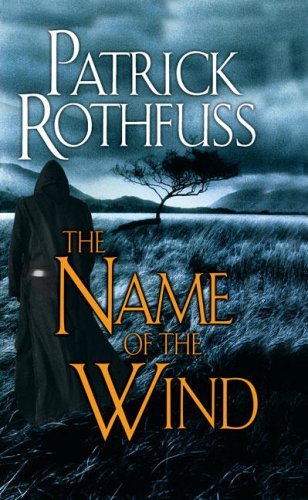
Name of the Wind (Tale of the ever expanding ego)
So, I'll fully admit, this book did not have me hooked at the start. First off, I don't really dig the super egotistical thang. Secondly, the format was a little jarring of the story within a story as well as the third person switch to first person. After finishing the book, I didn't mind the format and found it rather clever. Kvothe's story is incredibly fascinating, if only detracted by the blowhardiness of Kvothe himself. I mean, his ego wears a giant flashy hat which is wearing another fancy hat on top of a fez. His ego ends up getting tempered out by the constant rain of shit that happens to him and the entertainment comes from watching his clever ways to maneuver out of problems.
***SPOILER ALERT***
Super Dramatic Life Changing Moment #1: Kvothe details his life as one of the Edema Ruh, the wanderers, the performers. He had a happy family life early on with a mother and father who loved each other very much and an extended family from the performers who took care of each other. The problems begin with the Chandrian when his father is focused on creating a fantastical song about them. The result of his father's song is the entire camp being massacred with the exception of Kvothe who had been out in the woods leaving him with the haunting words that "Someone's been singing the wrong sort of songs."
Super Dramatic Life Changing Moment #2: Kvothe's entrance to the University of course can't be the normal, hey I went to school---it was pretty awesome, yo. Of course he set all of the newest brightest records by entering the school by having them pay him since he was so brilliant. And when he gets in trouble early on, he earns a whipping, but he also moves up in rank. Which is unheard of. Since he's so amazing. Like I said earlier, the book itself is incredibly engaging and entertaining, but MAN. This guy fucking loves himself.
Super Dramatic Life Changing Moment #3: Denna. She's not just the girl he loves. She's the most beautiful woman that ever lived and her eyes were full of moondrops and twiddleblossoms and her smile---Oh no. I can't compare how superfantasticalamazing she was to anything. So yeah. Kvothe exaggerates a bit. She's a fascinating character though who shows interest, but keeps dancing in and out of the picture so unexpectedly it keeps you engaged as a reader. She's a charmer for sure as well as a confidently manipulative woman in all the fun ways, but Kvothe goes on for pages and pages about her.
I started it out skeptically, especially once Kvothe's narrative voice took over. I didn't want to like it because this should be called Name of Kvothe's Ego. But the writing was fantastic and the story was incredibly fascinating and drags you along whether you want to keep reading or not. I'm anxiously looking forward to reading the next book, egotistical narrator or no!
Rating: 4
Wednesday, August 8, 2012
Arrows Fall (The one where no one communicates like effective adults)
This would have to be my favorite of all three books, although that's not saying a whole lot. I suppose if I took all three and squashed them together into one book, the third book did bring up something started in the first. The second book wouldn't have really been of any importance then though, aside from bringing her and Kris closer together. Confusion aside, the pseudo love triangle between Kris, Dirk and Talia kept things interesting if not frustrating. Truly, the plot could've been resolved in five seconds if any bothered to speak to one another, but of course for drama, it had to be dragged out.
***SPOILER ALERT***
Unnecessary Point #1: So the biggest and main issue in this book is that Dirk and Talia are meant to be together and their own stupidity is keeping them apart. Oh and the fact that Talia opened up her legs for his best friend Kris. Yet what do they do about it? Do they discuss things like rational adults? No. Talia remains silent (she's really good at that, oh passive character that she is) and Dirk becomes an alcoholic. And since Kris is the best friend, does he bother actually telling Dirk that Talia's interested in him? No, everyone plays avoidance games and draws this entire issue out much longer than necessary.
Unnecessary Point #2: How much everyone trusts Orthallen. Okay, he has a reputation for causing trouble. He's constantly arguing with Talia and yet, Talia's supposed best friends, Kris and Elspeth both fall for Orthallen's misguided advice. Now, yes, he's supposed to be a master manipulator, as he is actually a traitor (gasp! didn't see that one coming 500 miles away) And most of the characters are rather dumb with a lack of common sense, but the fact that nobody but Talia and the armsmaster notices the issue seems kind of ridiculous. Orthallen does plenty of obvious things that don't lend to good manipulation and is rubbish at covering his tracks.
Unnecessary Point #3 When Talia is captured, I thought the rape in that situation was one of the most brutally pointless parts of the book. It serves no purpose except to point a big flashing sign to Ancar and Hilda saying, oh, look how wicked they are! I've seen some stories where it actually fits based on the villain and comes from a deranged mindset, etc, but this just was so abrupt and seemed inserted just to shock the reader into hating the villain rather than building that hate throughout the story. They could've done without all the torture and rape and instead rather threatened it and achieved the same establishing effect, that the villains are evil.
Despite the unnecessary points of the book, I enjoyed it the most of the three, probably because even though a lot of it was ridiculous, the lifebond between Dirk and Talia was a fun way to explore the idea of soulmates and when they two of them interacted, it made you care for the characters more than all of their "struggles" in the other two books.
Rating: 2
Monday, August 6, 2012
Dealing with Dragons (Cherries jubilee is making a comeback)
This book is a fantastic young adult intro to writers like Terry Pratchett. The whole book pokes ridiculous fun at fantasy tropes all the meanwhile creating a fantastic world with memorable characters. Princess Cimorene is another female lead who was ahead of her time, sarcastic, rebellious and practical.
***SPOILER ALERT***
Don't Mess with Cimorene #1: The whole story starts off by explaining this princess (Cimorene) who looked and acted different than all the other princesses thought she should. Her family pushes through regardless, determined to do what is proper and arranges a marriage with a moronic prince named Therandil. A talking frog gives her the idea to become a dragon's princess however and thus starts the story rolling. Cimorene is told what is proper, promptly ignores it and signs up to be a dragon's princess by marching up to the dragons and offering her services, cherries jubilee included.
Don't Mess with Cimorene #2: There are many other moments that show her ingenuity throughout the story while she deals with pesky wizards as well as princes and knights determined to rescue her, but one of the highlights of this book had to be the encounter with the djinn. Therandil, ever determined to do what is proper and save her, despite the fact that she doesn't want to be saved, ends up opening a djinn's bottle while she's trying to clean. The djinn tells them they must die, but can choose the manner of their death. Cimorene chooses old age and the djinn gets flustered because its not proper. He's prepared to kill them anyway when Cimorene catches his slip that he wasn't quite in there the proper amount of time to kill them, but 'no one ever releases the djinn before the three hundred years.' Cimorene's solution? Go back in the bottle another hundred years and they'll be dead by then, getting her wish for a death by old age anyway.
Don't Mess with Cimorene #3: First the wizards kill the dragon King. Then they try to sabotage the race to choose a new one. Neither of these things sits well with Cimorene and to her luck, her and the Princess Alianora discovered a way to melt them: soapy lemon water. So with the help of the kooky witch Morwen, a stone prince and Princess Alianora, Cimorene takes the wizards on, one soapy bucket of water at a time. They stop them at the Ford of Whispering Snakes just before their plan could be pulled off and melt them all.
When it turns out Kazul, Cimorene's dragon, becomes the King of the Dragons, everything ends quite happily with Cimorene becoming the King's Librarian and Cook rather than the monotonous life of marrying a bore and becoming queen to a dullard like Therandil. Even though it ended on the happy ending trope of a fairy tale, Patricia Wrede does a brilliant job at keeping things fresh. Cimorene doesn't end up married away at the end of this book, rather she finds work and stays the same independent, fiesty woman we love.
Rating: 4
Tuesday, July 31, 2012
Ender's Game (Children reach a whole new level of ankle-biting dangerous)
This is one of those books I can't believe I never read when I was younger. Fascinating from the start, but with a life changing story and morals, Orson Scott Card outdid himself with Ender's Game. It's fascinating how he manages to blend youth and age seamlessly. While Ender starts at only six and when he becomes the commander, he's only eleven, the person you follow is wise beyond his years and the juxtaposition between following an adult mentality versus the occasional childlike things he does or says is jarring. The futuristic world is so cleverly created and integrated into the story line and Ender's story, as he's manipulated, used on whim and eventually rises above it, is a timeless tale.
***SPOILER ALERT***
Genius or Killer #1: The first time we meet Ender he's getting the monitor removed, which means that no one's watching him to keep the bullies at bay. From the outset, we see how Ender reacts, how he calculates the best possible way to be left alone and then deals with Stilson in the schoolyard. This mode of thinking, them against me, follows him throughout battle school and is the reason he's recruited in the first place. From an early point, they can see that while he cares about people and doesn't want to hurt anyone, when backed into a corner he'll make the harsh decisions. Heavy foreshadowing of what's to come. Bravo, Orson Scott Card.
Genius or Killer #2: Ender after being isolated at Battle School continues excelling despite all the hurdles thrown his way, despite all the antagonism from his peers. The teachers are completely unfair to him, throwing him into battle simulations early, throwing him on a team where the commander, Bonzo, hates him. Yet when Ender ends up as a commander, he wipes the board, every single time. His team becomes unbeatable to the envy and hatred of many in the school. Others decide to learn from him, to get better, but Bonzo, his original team leader hates him for it and wants to kill him. The confrontation reaches a peak when Bonzo gangs up on him, just like Stilson in the beginning and Ender reacts the same way when backed into a corner, making the hard choices and using wits over brawn. However, the teachers don't reveal that Bonzo was sent home in a bodybag, nor that Stilson was his first kill.
Genius or Killer #3: This is the big one, the gamechanger of the story where everything got turned over onto its head. These officers and teachers have been priming Ender for command, making his life a living hell. Finally in command school, Mazer Rackham, his teacher, runs him through countless simulations against the buggers while Ender commands all of his old friends from Battle school. Game after game after game until Ender's burnt out and wasted. Finally, the graduation test is sprung on him with no chance to prepare. And the odds are impossible. So Ender decides to stop playing their games and takes out the whole planet with the bombs rather than worrying about the onslaught of fleets, destroying the imaginary bugger homeworld in the process. Except Ender finds out it wasn't a game and that all of the simulations in Command School were real battles against the buggers. And he just annihilated another race.
This was the crescendo of the book, the breaking point for Ender. But he finds and communicates with a remaining bugger after a time and spreads a message of peace, reversing the damage he'd unintentionally done. Orson Scott Card's brilliant book leaves you with the duality of humankind that lives in all of us, the constant struggle of empathy and anger, but to which one wins out depends on each individual.
Rating: 4
Subscribe to:
Posts (Atom)